
FEMA's 50 Percent Rule and Substantial Improvement in Miami-Dade Flood Zones

Jonnatan R. Mendez, PE, SI • September 24, 2026

Share this article

No. Slip resistance is one input. A sound opinion reads it alongside the surface condition, any contaminant, footwear, lighting, and maintenance history.

Collapsed interior of a damaged brick building with rubble, exposed walls, and broken openings

The Short Version

The FEMA 50 percent rule decides when an older building in a flood zone has to be brought up to current flood standards. If the cost of a renovation, addition or repair equals or exceeds 50 percent of the market value of the structure, the project is a substantial improvement, and the whole building then has to meet the rules for new construction, which in an AE zone means a lowest floor at or above the base flood elevation plus freeboard. The same threshold applies after a storm or fire, when the cost to restore a damaged building reaches half its value, which is called substantial damage.

In Miami-Dade the rule is stricter than the federal minimum. The county adds up improvements over time rather than one permit at a time, and it requires at least one foot of freeboard above the base flood elevation. For an owner of an older home built at grade in an AE zone, crossing the line can turn a planned renovation into a rebuild, so the time to understand it is before the scope is fixed. The
structural design and analysis questions it raises, from foundations to elevation, are where an engineer comes in.

What the 50 Percent Rule Says

The rule comes from the National Flood Insurance Program regulations. Under 44 CFR 59.1, a substantial improvement is any reconstruction, rehabilitation, addition or other improvement of a structure whose cost equals or exceeds 50 percent of the structure's market value before construction starts. Substantial damage is damage of any origin where the cost of restoring the building to its condition before the damage would equal or exceed 50 percent of its market value before the damage. A substantially damaged building counts as substantially improved regardless of the repair work actually done.

Two kinds of work are excluded. Improvements required to correct existing health, sanitary or safety code violations that are solely necessary to assure safe living conditions do not count, and neither does an alteration to a historic structure that will not stop it from keeping its historic designation. Everything else in the project is on the table, including work that has nothing to do with flooding.

Communities enforce the rule because it is a condition of their participation in the flood insurance program. Under
44 CFR 60.3, communities must require new construction and substantial improvements of residential buildings in Zones A1 to 30, AE and AH to have the lowest floor, including any basement, elevated to or above the base flood level. That federal baseline is what Miami-Dade builds on.

How the 50 Percent Is Calculated

Market Value of the Structure

The denominator is the market value of the building alone, not the land it sits on. In South Florida that distinction matters, because land often makes up most of a property's value, and using the total sale price or total assessed value overstates what the building is worth. Miami-Dade's ordinance uses the appraised value of the structure before the start of the initial repair or improvement, or, for damage, its value just before the damage occurred. An owner who thinks the default figure is too low can usually submit an independent appraisal of the structure for the building department to consider.

Cost of the Improvement

The numerator is the full cost of the work, priced at market rates, whether the owner hires a contractor or does part of it themselves. FEMA's guidance for floodplain managers stresses that after damage, the cost to repair must be calculated for full repair to the building's condition before the damage, even if the owner chooses to do less, and must include any improvements the owner adds at the same time. In general, the costs that count and the costs that do not look like this.

  • Counted: structural work, roofing, windows and doors, interior finishes, cabinets and built-in fixtures, plumbing, electrical and mechanical systems, and the contractor's labor, overhead and profit.
  • Usually not counted: plans and specifications, surveys, permit fees, debris removal and cleanup, and items that are not permanently attached to the building, such as furniture and freestanding appliances.

The building department applies its own worksheet, so the list above is a guide to what to expect rather than a substitute for asking. The safe assumption is that anything built into the house will be counted.

Miami-Dade's Stricter Version

Chapter 11C of the Code of Miami-Dade County, the county's floodplain regulations, was comprehensively revised in 2022, through Ordinance Nos. 22-141 and 22-142, partly to earn a better Community Rating System class and lower flood insurance premiums. It applies in unincorporated Miami-Dade and in the parts of incorporated areas where the county has jurisdiction over building permits. Three of its provisions go further than the federal minimum.

  • Cumulative counting. Any combination of repairs, reconstruction, alterations or improvements taking place within six months counts together, and within the coastal building zone defined in Fla. Stat. 161.54, a band along the coast that takes in much of the barrier islands, the period is five years.
  • Freeboard. The lowest floor of a residential building in a special flood hazard area, including attached garages and enclosures, must be elevated to the base flood elevation plus freeboard, defined as the stricter of one foot or the freeboard the Florida Building Code requires. Machinery and equipment must be elevated to the same level.
  • No floodproofing for homes. Residential buildings cannot meet the requirement with dry or wet floodproofing, although attached garages and storage enclosures may be wet floodproofed. Nonresidential buildings may be dry floodproofed to the same level instead.

Cities that run their own building departments are separate participants in the flood insurance program and adopt their own floodplain ordinances. A renovation in Homestead, Coral Gables or another municipality follows that city's version, which may set a different accumulation period. The first question for any project is which ordinance applies to the address.

What a Substantial Improvement Requires

Once a project is a substantial improvement, the building as a whole has to comply, not only the new work. Section 1612 of the Florida Building Code, Building governs flood loads and flood-resistant construction in flood hazard areas, and it works together with the county's floodplain rules. In an AE zone, compliance usually comes down to the following.

  • The lowest floor elevated to the base flood elevation plus freeboard, with mechanical, electrical and plumbing equipment at or above the same level.
  • Flood-resistant materials below that elevation, and a building anchored against flotation, collapse and lateral movement.
  • Any enclosed area below an elevated floor limited to parking, building access or storage, with at least two flood openings totalling one square inch of net area for each square foot of enclosed area, the bottom of each no more than one foot above grade.
  • Foundation plans signed and sealed by a Florida licensed engineer or architect, and a certified lowest floor elevation from a surveyor or engineer submitted before the tie-beam inspection.

In coastal high hazard areas, the VE zones along the open coast, the requirements are stricter again. Buildings are elevated on piles or columns, and the space below can only be enclosed with breakaway walls, lattice or screening designed to fail under wave action without damaging the structure. Under Miami-Dade's rules, an area enclosed by unreinforced block larger than 299 square feet is treated as the lowest floor for flood insurance purposes.

Why It Matters for AE Zone Renovations

Many older homes in Miami-Dade's AE zones were built with a slab on grade before flood maps existed, and their lowest floors sit below today's base flood elevation. For those homes the 50 percent line is easier to cross than owners expect. A new roof, impact windows, a kitchen and two bathrooms can add up to half the value of a modest older house, especially once the land is excluded from the value.

f the project crosses the line, raising a concrete block house on a slab is technically possible but rarely practical, and the realistic options become reducing or phasing the scope, elevating the building, or demolishing and rebuilding to current standards. Phasing only works within the county's rules, because improvements inside the six month or five year window are added together. That is why the scope, the estimate and the market value should be settled before design goes too far. It applies to the smaller jobs that often start a renovation, too; even
removing a wall is part of the total cost.

Coastal condominiums face a version of the same question. Large concrete restoration projects that follow a milestone inspection in buildings in
Miami Beach or Key Biscayne are repairs, and repair costs count toward the threshold under the county's definition. Associations planning major work should confirm early how their city counts it.

Spalled concrete and a corroded reinforcing bar at a beachfront condominium balcony, documented by M&P Consulting Engineers

How the Determination Works

The building department makes the substantial improvement determination as part of the permit review, but the owner and design team supply most of what it relies on. On a well-run project the sequence looks like this.

  • Confirm the flood zone and base flood elevation for the address from the effective flood map, not a preliminary one, and find or order an elevation certificate showing the current lowest floor.
  • Establish the market value of the structure, using the building department's default method or an independent appraisal of the building alone.
  • Prepare a complete cost estimate for the whole scope, including work planned in later phases inside the accumulation period.
  • Submit the estimate and value for the building department's review, and adjust the scope if the result is close to the line.
  • If the project is a substantial improvement, design the building to comply, including the foundation, elevation and flood openings, and have the foundation plans sealed.
  • Submit the certified lowest floor elevation at the required inspection stage and keep the scope matched to what was approved.

Mistakes That Trigger the Rule by Surprise

Most substantial improvement problems come from how the project is scoped and documented rather than from the rule itself. These are the ones that catch owners most often.

  • Splitting one renovation into several small permits, which the county adds back together within the accumulation period.
  • Leaving items out of the estimate, only for the building department or a later inspection to add them back.
  • Using the total property value, land included, as the market value of the structure.
  • Adding scope during construction without reporting it, which can push an approved project over the line after the fact.
  • Assuming storm repairs are exempt, when a hurricane or fire that causes substantial damage triggers the same requirements.
  • Designing to a preliminary flood map, which Miami-Dade's ordinance says may not be relied on in place of the effective map.

How M&P Consulting Engineers Helps

Jonnatan R. Mendez, PE, SI, has more than 20 years of structural design, condition assessment and repair work on South Florida buildings. His background covers concrete, masonry, steel, aluminum and wood construction, and repair, retrofit and rehabilitation design, which is the work a flood zone renovation usually involves.

For owners in flood zones, we evaluate the existing structure and foundation, help define a repair or renovation scope the owner can defend, and when a project is a substantial improvement, design the structural work compliance requires and seal the foundation plans the county asks for. For damage after a storm, our
forensic engineering documents what the event caused, which feeds directly into the cost to repair that decides substantial damage, a process described in our guide to hurricane damage claims.

Common Questions About the FEMA 50 Percent Rule

  • Does the 50 percent rule apply if my home is in Zone X?

    The federal substantial improvement requirement applies in special flood hazard areas, such as Zones AE and VE. Outside them, Miami-Dade still sets minimum floor elevations for new construction, so check with the building department before any major rebuild.

  • Does a new roof count toward the 50 percent?

    Yes. Reroofing is an improvement to the structure, so its full cost counts. On an older home it is often one of the largest single items in the total.

  • Can I challenge the market value the building department uses?

    Usually, yes. Most departments accept an independent appraisal of the structure, excluding land, prepared by a qualified appraiser. Ask the building department what it will accept before ordering one.

  • What happens if a hurricane substantially damages my house?

    If restoring it to its condition before the storm would cost 50 percent or more of its value, it must be repaired to current flood standards. Owners with a National Flood Insurance Program policy may be able to claim Increased Cost of Compliance coverage, currently up to $30,000, toward that work.

  • Does an addition have to meet flood standards if the house does not?

    The addition itself generally has to meet current flood requirements. Its cost also counts toward the 50 percent for the house, and if the total crosses the line the whole building has to comply.

Planning a Renovation in a Miami-Dade Flood Zone?

M&P Consulting Engineers evaluates existing structures, helps owners scope renovations around the 50 percent rule, and designs and seals the structural work compliance requires. Call 866-531-7621 before the scope is final, while there are still choices to make.

Sources

44 CFR 59.1, Definitions (substantial improvement, substantial damage), and 44 CFR 60.3, Flood plain management criteria for flood-prone areas.

FEMA, National Flood Insurance Program Floodplain Management Requirements study guide, Unit 8: Substantial Improvement and Substantial Damage.

Code of Miami-Dade County, Chapter 11C, Floodplain Regulations, as revised by Ordinance Nos. 22-141 and 22-142 (2022). Checked 24 September 2026.

Florida Building Code, Building, 8th Edition (2023), Section 1612, Flood Loads.

Fla. Stat. 161.54, definitions (coastal building zone).

Recent Posts

By Jonnatan R. Mendez, PE, SI • October 5, 2026
What a structural engineer expert witness does in Florida litigation, explained by a licensed Miami engineer. The Daubert standard under Fla. Stat. 90.702, why it applies to engineers, and what makes testimony survive a challenge. Call 866-531-7621.
By Jonnatan R. Mendez, PE, SI • September 30, 2026
Threshold building inspections in Florida, explained by a Miami structural engineer. What makes a building a threshold building, what a special inspector does under Fla. Stat. 553.79, who can serve, and how it differs from a milestone inspection. Call 866-531-7621.
By Jonnatan R. Mendez, PE, SI • September 25, 2026
Florida's condo safety laws after Surfside, explained by a Miami structural engineer: SB 4-D (2022), SB 154 (2023) and HB 913 (2025), what each one changed for milestone inspections and SIRS, and the deadlines that apply now. Call 866-531-7621.
Corner balconies on a coastal condo tower in Palm Beach Shores, assessed by M&P Consulting Engineers
By Jonnatan R. Mendez, PE, SI • September 25, 2026
What changed after the Surfside condo collapse: NIST's June 2026 technical findings, SB 4-D, SB 154 and HB 913, and the milestone inspection mistakes Florida condo boards still make. Call 866-531-7621.
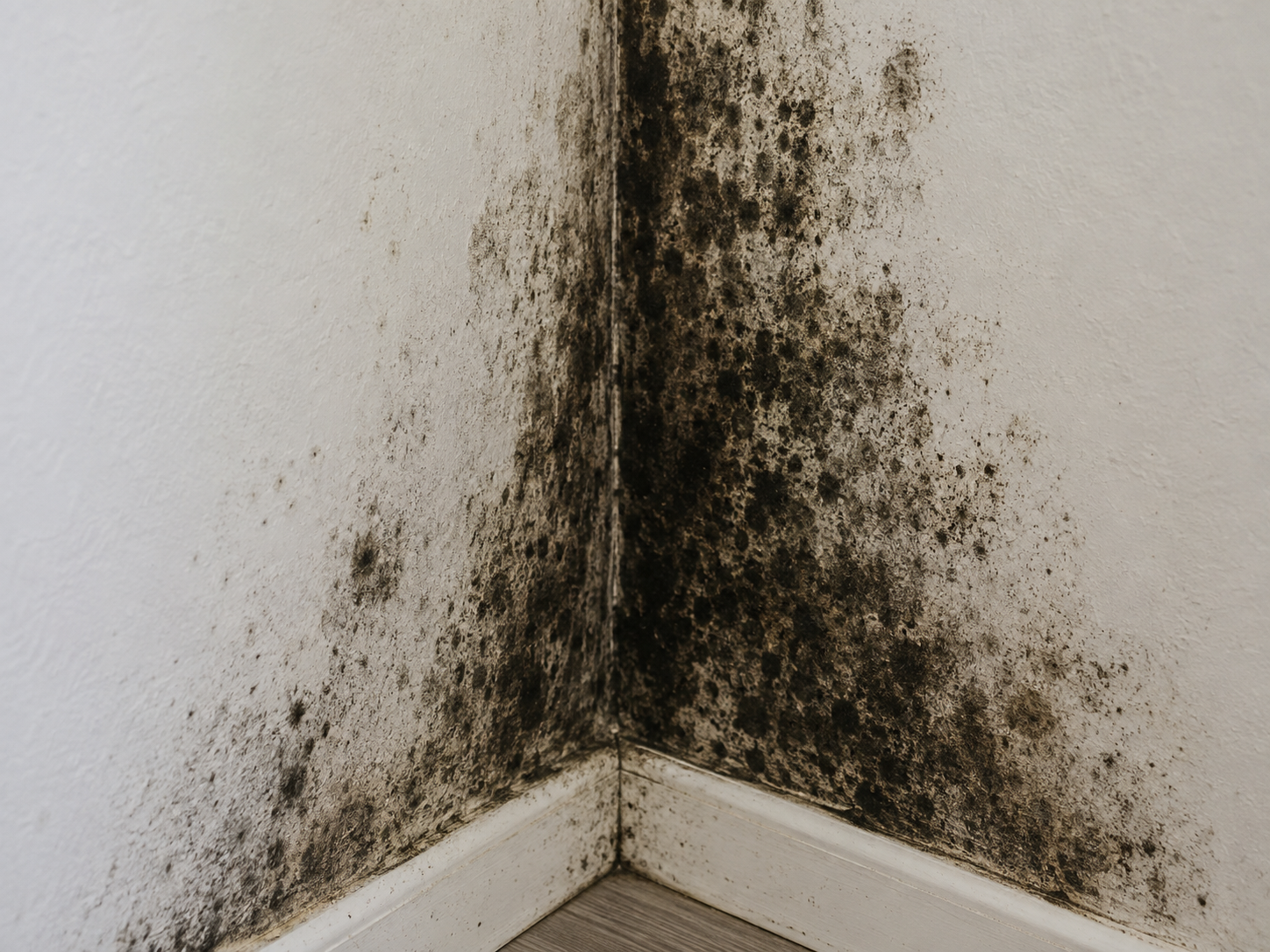
Dark mold growth spreading up an interior wall corner, the kind a licensed mold assessor evaluates
By Jonnatan R. Mendez, PE, SI • September 25, 2026
Before you hire for a mold assessment in Miami: how Florida licenses mold assessors under Fla. Stat. 468 Part XVI, the 12 month assessor versus remediator rule, and what a licensed PE adds. Call 866-531-7621.
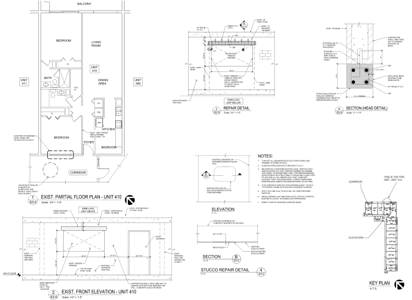
Structural drawing with plan, wall sections and details, ready for a Florida PE to sign and seal
By Jonnatan R. Mendez, PE, SI • September 25, 2026
What a Florida professional engineer seal means under Chapter 471: what must be signed and sealed, physical, digital and electronic sealing under Rule 61G15-23, and how to verify an engineer's license. Call 866-531-7621.
Drawing sheet with floor plan, wall sections and details, as checked in a structural plans review
By Jonnatan R. Mendez, PE, SI • September 25, 2026
Structural plans review in Florida for municipalities and developers: contract plan review under Fla. Stat. 468, private provider review and deadlines under 553.791, and how independent peer review differs. Call 866-531-7621.
Concrete balconies on a Palm Beach Shores beachfront building, evaluated by M&P Consulting Engineers
By Jonnatan R. Mendez, PE, SI • September 25, 2026
Concrete spalling balcony inspection in coastal Florida, explained by a structural engineer: how rebar corrosion causes spalling, what inspectors look for, when it triggers a Phase 2 milestone inspection, and how ACI 562 repairs work. Call 866-531-7621.
One-story South Florida home with dark roof and yard, typical of M&P Consulting Engineers projects
By Jonnatan R. Mendez, PE, SI • September 24, 2026
Do you need a structural engineer to remove a wall in Miami-Dade? A licensed Miami engineer explains load-bearing walls, permits, the Florida Building Code rules and sealed drawings under Fla. Stat. 471, for homeowners planning an open layout. Call 866-531-7621.
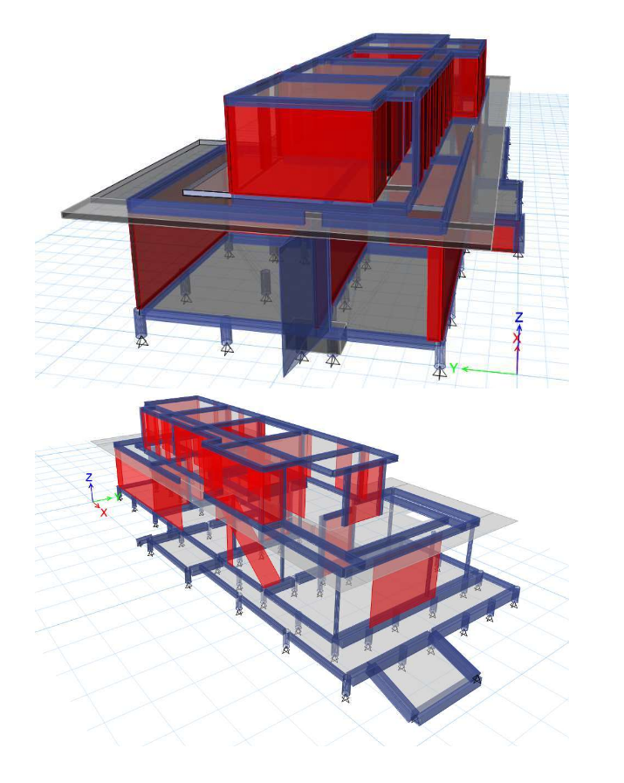
3D structural analysis model of two building frames for wind load design by M&P Consulting Engineers
By Jonnatan R. Mendez, PE, SI • September 24, 2026
The high velocity hurricane zone explained by a Miami structural engineer for architects and contractors: FBC Chapter 16 HVHZ wind loads and impact tests, Miami-Dade NOA product approval, and how design pressures and approvals fit together. Call 866-531-7621.

Show More