Hurricane Damage Claims in Florida: Wind vs. Water, Pre-Existing Conditions, and the Engineer's Report
No. Slip resistance is one input. A sound opinion reads it alongside the surface condition, any contaminant, footwear, lighting, and maintenance history.

The Short Version
After a Florida hurricane, most disputed property claims come down to three questions: what force caused the damage, whether that damage was there before the storm, and whether the claim was reported in time. The first two are engineering questions. Wind and water are usually insured differently, because most homeowners and commercial property policies exclude flood and storm surge, which is covered by a separate flood policy. A single building can show both kinds of damage side by side, and the adjustment depends on which mechanism caused which part.
Answering those questions is
forensic engineering, and a hurricane damage inspection engineer answers them from physical evidence rather than from the timing of the storm. That means documenting damage patterns, reading them against wind and flood signatures, dating distress that looks old, and comparing what failed with what the building was designed to resist under the Florida Building Code and ASCE 7. The result is a signed and sealed report stating what caused each element of damage, what did not, and why. For carriers, adjusters, owners and counsel, that report is only as good as the inspection behind it.
Wind vs. Water: Why the Line Matters
Most property policies treat wind and water as separate perils.
FEMA states that most homeowners insurance does not cover flood damage, which is why flood coverage is sold as a separate policy through the National Flood Insurance Program or private flood carriers. Storm surge, the ocean pushed ashore by a hurricane, is flood under those policies. Rain that enters through an opening the wind has just torn in a roof or wall is often treated differently from rain that seeps through a roof that was already leaking, and the policy language decides which is which.
That split is why the engineering matters. On a coastal building, one storm can strip tiles off the roof, drive rain through a failed window, and push surge water three feet up the ground floor walls. Each of those can fall under a different coverage, a different deductible, and sometimes a different carrier. The engineer does not interpret the policy; the adjuster and counsel do that. The engineer tells them, element by element, which mechanism caused the damage, so the policy is applied to facts instead of assumptions.
Separating Wind Damage From Water Damage
Wind and water leave different evidence, and reading that evidence is the core of the inspection. Wind loads act on the whole building envelope, with the highest pressures at roof corners, edges and ridges, which is why ASCE 7 assigns those zones larger design pressures than the middle of the roof. Water acts from the ground up and leaves its marks at a consistent elevation. The engineer maps the damage against both patterns before drawing any conclusion.
Indicators of Wind Damage
- Damage that follows the wind direction, with missing or lifted roof coverings concentrated at corners, eaves, rakes and ridges rather than spread evenly across the roof.
- Creased or torn shingles, broken or displaced tiles, and peeled metal panels whose fracture and tear surfaces are fresh, with no weathering or staining at the break.
- Failed connections along the load path, such as roof sheathing pulled off its fasteners, trusses lifted at their straps, or gable end walls pushed in or pulled out.
- Impact marks and punctures from windborne debris, and broken windows or doors that let internal pressure build and push the roof up from the inside.
- Interior water staining directly below a new opening in the roof or wall, where the opening came first and the rain followed it in.
Indicators of Flood and Storm Surge Damage
- A horizontal water line at a consistent elevation across interior and exterior walls, often with a band of debris or sediment at the same height.
- Silt, sand and marine debris deposited inside the building, with drywall, insulation and flooring saturated from the floor upward.
- Scour and undermining at foundations, slab edges and pile caps, and structures shifted or floated off their foundations.
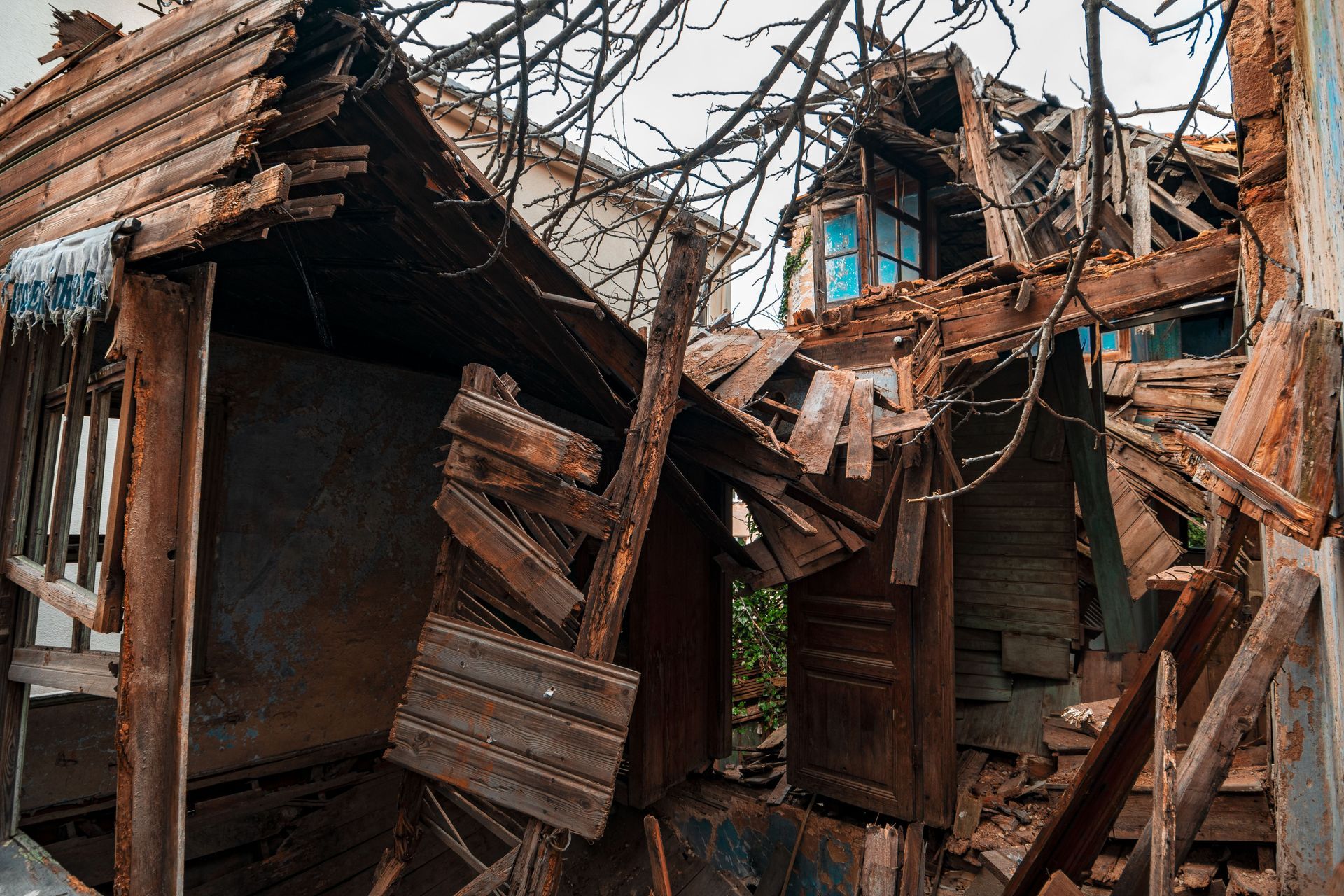
- Breakaway walls, ground level enclosures and ground mounted equipment destroyed while the roof and upper floors remain largely intact.
Real buildings rarely show one pattern cleanly. A ground floor unit can have surge damage to its walls and wind driven rain damage to its ceiling at the same time. A sound report separates those areas, assigns each to its mechanism, and states the evidence behind each call. That is what lets the adjuster build an estimate that holds up when the claim is reviewed, appraised or litigated.
Pre-Existing Conditions and Long-Term Deterioration
The second question in almost every hurricane claim is whether the storm caused the damage at all. Florida buildings age quickly. Salt air corrodes reinforcing steel, sun and heat break down roofing, and years of small leaks rot decking and stain ceilings. After a named storm, all of that distress is suddenly noticed and suddenly reported, and some of it has nothing to do with the event.
Engineers date damage from the physical evidence. A fresh fracture in a tile, a truss or a concrete edge is clean and bright; an old one is weathered, stained, or packed with dirt and organic growth. Corrosion stains running down a wall, spalled concrete over rusted rebar, and shingles that lost most of their granules years ago all point to a long process rather than a single day. Earlier repair patches, mismatched materials, and old ceiling stains with layered tide marks tell the same story.
Records of the building before the storm are more common than many parties realize. Condominium and cooperative buildings in Florida now carry
milestone inspection reports, and older buildings in Miami-Dade and Broward carry
recertification reports, both of which record structural condition at a known date. A roof permit, a recent survey, or an earlier claim file can do the same. An engineer who gathers those documents early can often show which cracks, spalls or roof deficiencies were already recorded before landfall and which appeared afterward.
The Codes Behind the Opinion
A causation opinion rests on how the building was supposed to perform. Chapter 16 of the Florida Building Code sets the structural design loads for buildings, including wind, using ASCE 7 as its reference standard. The 8th Edition of the code, in effect since December 31, 2023,
correlates its wind criteria with ASCE 7-22, which updated the wind speed maps and added provisions including tornado loads. In Miami-Dade and Broward, the
High-Velocity Hurricane Zone provisions add stricter requirements on top of that.
That matters in a claim because design wind speeds describe what a building should resist, and the storm's actual winds can be compared with them. ASCE 7 wind speeds are 3-second gusts measured 33 feet above open terrain, set for the risk category of the building. If gusts at the site were well below the design speed and the roof still failed, the engineer looks harder at installation, attachment and deterioration. If gusts approached or exceeded design levels, wind becomes the more likely driver. The building's age matters too, since a house permitted under an older code was designed to a different standard than one built today.
The codes also shape the repair scope. Under
Fla. Stat. 553.844(5), when a roof system was built, repaired or replaced to the 2007 Florida Building Code or later, repairing 25 percent or more of it requires only the repaired portion to meet the current code, rather than forcing a full replacement. The 2007 code took effect on March 1, 2009, so the roof's permit date matters. Separately,
Fla. Stat. 627.7011 requires homeowners insurers to offer law and ordinance coverage, which pays the added cost of meeting current code during repairs at limits of 25 or 50 percent of the dwelling limit. The engineer's report identifies which components need code upgrades, so those provisions can be applied to the actual building.
Claim Deadlines Under Fla. Stat. 627.70132
Florida's notice deadlines are short, and they set the pace for the engineering. Under
Fla. Stat. 627.70132, a new or reopened property insurance claim is barred unless notice is given to the insurer within one year after the date of loss, and a supplemental claim is barred unless notice is given within 18 months. For a hurricane, the statute fixes the date of loss as the date the hurricane made landfall. For tornadoes, windstorms and severe rain, it is the date NOAA verifies the event.
The statute does not change the separate time limit for filing a lawsuit under Fla. Stat. 95.11, but in practice the notice deadline drives the schedule. A supplemental claim for damage found later, such as water intrusion that appears months after the storm, has to be tied to the same peril, and that is a causation question. The later an engineer is brought in, the more the building has been repaired, dried out, or exposed to further weather, and the harder that link is to prove or to rule out.
What the Engineer's Report Should Contain
For a carrier or adjuster, the engineer's report is the document the coverage decision rests on. For counsel, it is the foundation of expert testimony that will be tested under Florida's Daubert standard in Fla. Stat. 90.702. A report that holds up in both settings usually contains the following.
- The scope of the assignment and the questions the engineer was asked to answer, stated plainly at the start.
- A site inspection record with the date, weather, areas accessed and not accessed, and a photograph log keyed to a plan of the building.
- A document review covering permits, construction drawings, prior inspection and recertification reports, maintenance and repair records, and earlier claims where they exist.
- Weather data for the event at or near the site, such as National Hurricane Center storm reports and nearby station records, compared with the building's design wind speed.
- An element-by-element damage analysis stating the mechanism for each item, the evidence behind it, and any alternative cause the engineer considered and ruled out.
- Conclusions and repair recommendations, including required code upgrades, signed and sealed by the responsible Florida Professional Engineer.
The same structure serves every party. An owner can see why part of a claim was supported and part was not, a carrier can see that the decision had a technical basis, and an attorney can see exactly which facts each opinion depends on.
Mistakes That Undermine a Hurricane Claim
Most disputes over hurricane claims are not about engineering principles. They come from evidence that was lost, never collected, or never written down. These are the problems we see most often.
- Repairs or demolition before documentation. Tarps and emergency repairs are necessary, but removing damaged roofing, drywall or framing before it is photographed and measured erases the evidence of what caused it.
- Relying on the storm date alone. Damage reported after a hurricane is not proof that the hurricane caused it, and a report that assumes causation from timing will not survive review.
- Ignoring the building's history. Skipping permits, prior reports and earlier claims leaves pre-existing conditions unaddressed, and the other side will raise them.
- Treating a mixed loss as a single peril. Calling everything wind, or everything flood, on a building that plainly shows both invites a challenge to the entire opinion.
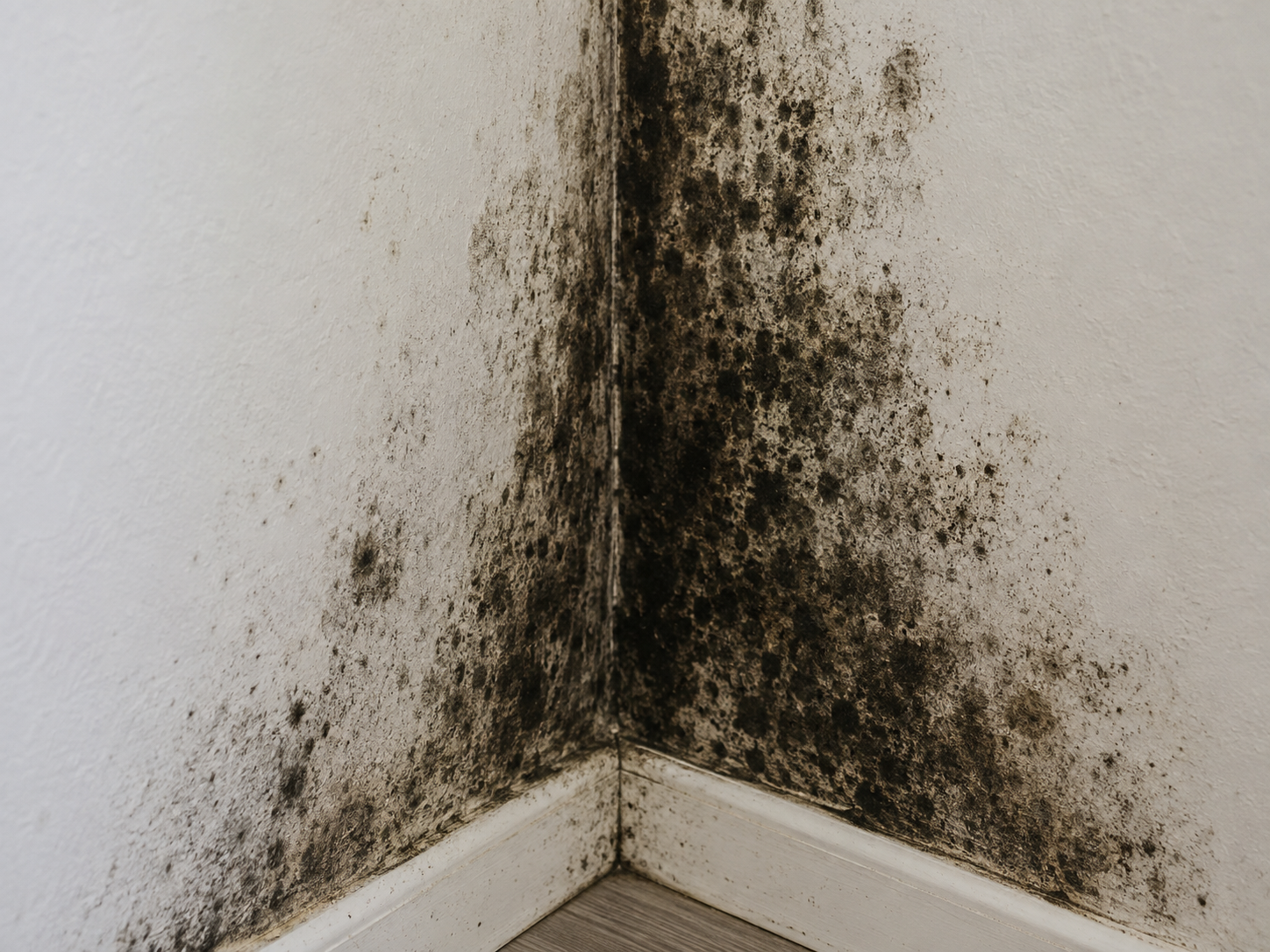
- Waiting too long to inspect. Every week after the storm brings more rain, more
mold growth and more repairs, and the evidence moves further from its condition on the date of loss.
How M&P Consulting Engineers Approaches Hurricane Claims
Jonnatan R. Mendez, PE, SI, has spent more than 20 years on structural engineering, forensic investigations and property losses. Before founding M&P Consulting Engineers in Miami in 2019, he held senior roles with Rimkus Consulting Group, J.S. Held, where he was South Florida area lead, Halliwell Engineering Associates, and ProNet Group, where he directed complex loss work. That experience covers hurricane wind and water damage, roofing and building envelope failures, concrete deterioration and catastrophic losses.
Every assignment is handled directly by the principal, from the site inspection through the signed and sealed report. We work for insurance carriers, adjusters, property owners, condominium associations and attorneys, and our opinions rest on the physical evidence, the documents and the analysis, whoever retains us. The same method applies to any windstorm, as in our assessment of
tornado damage at a Jupiter commercial property. For South Florida assignments, we schedule inspections within days, and sooner where there are safety concerns.
When a claim moves into litigation, Jonnatan has given testimony in Miami-Dade, Broward, Collier, Lee and Monroe County courts and in the U.S. District Court for the Southern District of Florida. Because the engineer who inspects the building also writes the report and gives the testimony, the method and the opinion stay connected from the first site visit to the courtroom.
Common Questions About Hurricane Damage Inspections
Who hires the engineer on a hurricane claim?
Whoever needs the answer. Carriers often retain engineers during the adjustment, and owners, associations and attorneys retain their own to review a claim or a denial. Our findings do not change with the client, because they rest on the same evidence.
Can an engineer still help if the roof has already been replaced?
Often, yes, though with more limits. We work from photographs, any removed materials that were kept, contractor invoices, permits and earlier reports, and the report states clearly what could and could not be verified. Keeping removed material and taking dated photographs before repairs makes a real difference.
Does the hurricane deductible change what the engineer looks at?
No. The adjuster applies the deductible once causation is known. The engineer identifies the mechanism behind each element of damage, and that tells the adjuster which coverage and which deductible apply.
How long does a hurricane damage report take?
It depends on the size of the building, access, and how many documents need review. A single family roof claim moves faster than a high-rise with multiple damage areas. We give a schedule when the assignment is confirmed.
Do you inspect condominium and commercial buildings, or only homes?
Both. We inspect single family homes, condominium and multi-family buildings, and commercial, industrial and institutional properties. For condominiums, existing milestone reports and structural integrity reserve studies often give a useful record of the building before the storm.
Need a Hurricane Damage Inspection in South Florida?
M&P Consulting Engineers provides hurricane damage inspections and forensic engineering reports for carriers, adjusters, owners and counsel across South Florida and the Treasure Coast. Call 866-531-7621 as early as you can after the storm, while the damage can still be documented as it is.
Sources
Fla. Stat. 627.70132, Notice of property insurance claim, Florida Legislature. Checked 24 September 2026.
Fla. Stat. 627.7011, Homeowners' policies; offer of replacement cost coverage and law and ordinance coverage, Florida Legislature. Checked 24 September 2026.
Fla. Stat. 553.844, Windstorm loss mitigation; requirements for roofs and opening protection, Florida Legislature. Checked 24 September 2026.
Florida Building Commission, Wind Loads: Impacts From ASCE 7-22 (fact sheet, June 2024).
ASCE/SEI 7-22, Minimum Design Loads and Associated Criteria for Buildings and Other Structures.
FEMA, Flood Insurance and the National Flood Insurance Program.
Recent Posts