
Florida Condo Inspection Law in Plain English: A Guide for Boards and Property Managers

Jonnatan R. Mendez, PE, SI • September 23, 2026

Share this article

When is our building's inspection due?

Not for the structural components a SIRS covers. Those reserves can no longer be waived or reduced by owner vote.

Who can perform these for us?

Real estate paperwork and calculators on a desk, with blue sales flyers and colorful sticky notes

If you sit on a condo board or manage a building in Florida, two requirements now drive most of your structural compliance: the milestone inspection and the structural integrity reserve study, or SIRS. Between them they answer whether your building is structurally safe and whether you are setting aside enough money to keep it that way. This is the plain-English version, without the statute-by-statute detail, so you can tell what applies to your building and what you owe by when.

The Two Requirements, in One Paragraph

The milestone inspection is a physical inspection of the structure by a licensed engineer or architect. The SIRS is a funding study that projects the cost of maintaining and replacing your major structural components and sets a reserve schedule to pay for it. One asks whether the building is safe. The other asks whether the association can afford to keep it safe. Our Florida Milestone Inspections Explained article covers the inspection in depth, and the two requirements are meant to work together.

Which Buildings Are Covered

Both requirements apply to residential condominium and cooperative buildings that are three or more habitable stories tall. Four-family dwellings of three or fewer habitable stories are exempt. Mixed-ownership buildings, where only part of the building is condo or cooperative, are still covered, and all owners share responsibility for compliance. If you are not sure whether your building crosses the three-story line as the law counts it, that is worth confirming with an engineer before a deadline forces the question.

The Milestone Inspection, Plainly

Your building owes its first milestone inspection when it reaches 30 years of age, or 25 years if your local building department requires the earlier clock because of proximity to saltwater. After the first one, inspections repeat every 10 years. The inspection runs in two phases. Phase 1 is a visual assessment. If the inspector finds signs of substantial structural deterioration, Phase 2 goes deeper with the testing needed to evaluate it. Once the report is done, the association distributes a summary to owners. A building that has received a notice is already on the clock, so the practical move is to schedule the inspection early rather than near the deadline.

The SIRS, Plainly

The SIRS looks at your building's major structural components, the roof, structure and load-bearing walls, foundation, plumbing, waterproofing, and the rest, and estimates their remaining life and replacement cost. Those numbers become a reserve funding schedule. The key change for boards is that you can no longer vote to waive or underfund the reserves tied to these structural components. If a milestone inspection was done recently, it can feed the SIRS, which is why boards so often coordinate the two.

The Deadlines That Actually Matter

For most existing associations, the first SIRS was due by December 31, 2025. A building with a milestone inspection due on or before December 31, 2026 can coordinate the two, but the SIRS can be no later than that date. Milestone deadlines are keyed to your building's age and your local enforcement agency's rules. Miss either and you expose the association to code enforcement and to insurance problems, since Citizens will not cover an association that is out of compliance. The 40-year recertification comparison is worth a read if your building also falls under a county program.

How Boards Usually Handle Both

The efficient path is to run the milestone inspection and the SIRS structural assessment off a single engineering visit, so the condition findings and the reserve numbers come from the same read of the building. Hire a licensed engineer for the structural side, let a reserve professional build the funding schedule if you use one, and put the reserves in the budget. Associations in Broward and across the region handle it this way every year.

Where Boards Get Tripped Up

A few mistakes come up again and again. The first is treating the milestone inspection and the SIRS as one thing. They overlap, but they are separate filings with separate purposes, and doing one does not satisfy the other. The second is assuming a building is too small to be covered, when the three-habitable-stories line is measured in a way that can surprise you. The third is waiting for the county or state notice before scheduling anything. The notice starts a clock, and inspectors and engineers book up as deadlines cluster, so the associations that wait are the ones that scramble. The fourth is still budgeting as if the reserves can be waived. For the structural components a SIRS covers, they cannot. The last is hiring an inspector who is not a Florida-licensed engineer or architect, whose report the enforcement agency will not accept. None of these are hard to avoid, but each one costs time an association on a deadline does not have.

Common Questions About Florida's Condo Inspection Law

  • What is the Florida condo inspection law?

    It is the combination of the milestone inspection and the structural integrity reserve study required for condominium and cooperative buildings three or more habitable stories tall.

  • Is the milestone inspection the same as the SIRS?

    No. The milestone inspection checks whether the structure is safe. The SIRS is a funding study for structural reserves. They are timed to work together but are separate requirements.

  • When is our building's inspection due?

    The first milestone inspection is due at 30 years, or 25 years if your local agency requires it, and every 10 years after. The first SIRS was due December 31, 2025, or by December 31, 2026 when coordinated with a milestone.

  • Can the board waive the reserves?

    Not for the structural components a SIRS covers. Those reserves can no longer be waived or reduced by owner vote.

  • Who can perform these for us?

    A Florida-licensed engineer or architect performs the milestone inspection and the structural portion of the SIRS. A reserve professional can build the funding schedule.

Need Help With a Milestone or SIRS in South Florida?

M&P Consulting Engineers handles the structural side of milestone inspections and reserve studies for condominium and cooperative associations across South Florida. If your board is facing a deadline or trying to coordinate both, call 866-531-7621.

Sources

Fla. Stat. 553.899, milestone inspections, Florida Legislature. Checked 18 September 2026.

Fla. Stat. 718.112(2)(g), structural integrity reserve studies, Florida Legislature. Checked 18 September 2026.

Florida DBPR condominium FAQ, Division of Florida Condominiums. Checked 18 September 2026.

Recent Posts

By Jonnatan R. Mendez, PE, SI • October 5, 2026
What a structural engineer expert witness does in Florida litigation, explained by a licensed Miami engineer. The Daubert standard under Fla. Stat. 90.702, why it applies to engineers, and what makes testimony survive a challenge. Call 866-531-7621.
By Jonnatan R. Mendez, PE, SI • September 30, 2026
Threshold building inspections in Florida, explained by a Miami structural engineer. What makes a building a threshold building, what a special inspector does under Fla. Stat. 553.79, who can serve, and how it differs from a milestone inspection. Call 866-531-7621.
By Jonnatan R. Mendez, PE, SI • September 25, 2026
Florida's condo safety laws after Surfside, explained by a Miami structural engineer: SB 4-D (2022), SB 154 (2023) and HB 913 (2025), what each one changed for milestone inspections and SIRS, and the deadlines that apply now. Call 866-531-7621.
Corner balconies on a coastal condo tower in Palm Beach Shores, assessed by M&P Consulting Engineers
By Jonnatan R. Mendez, PE, SI • September 25, 2026
What changed after the Surfside condo collapse: NIST's June 2026 technical findings, SB 4-D, SB 154 and HB 913, and the milestone inspection mistakes Florida condo boards still make. Call 866-531-7621.
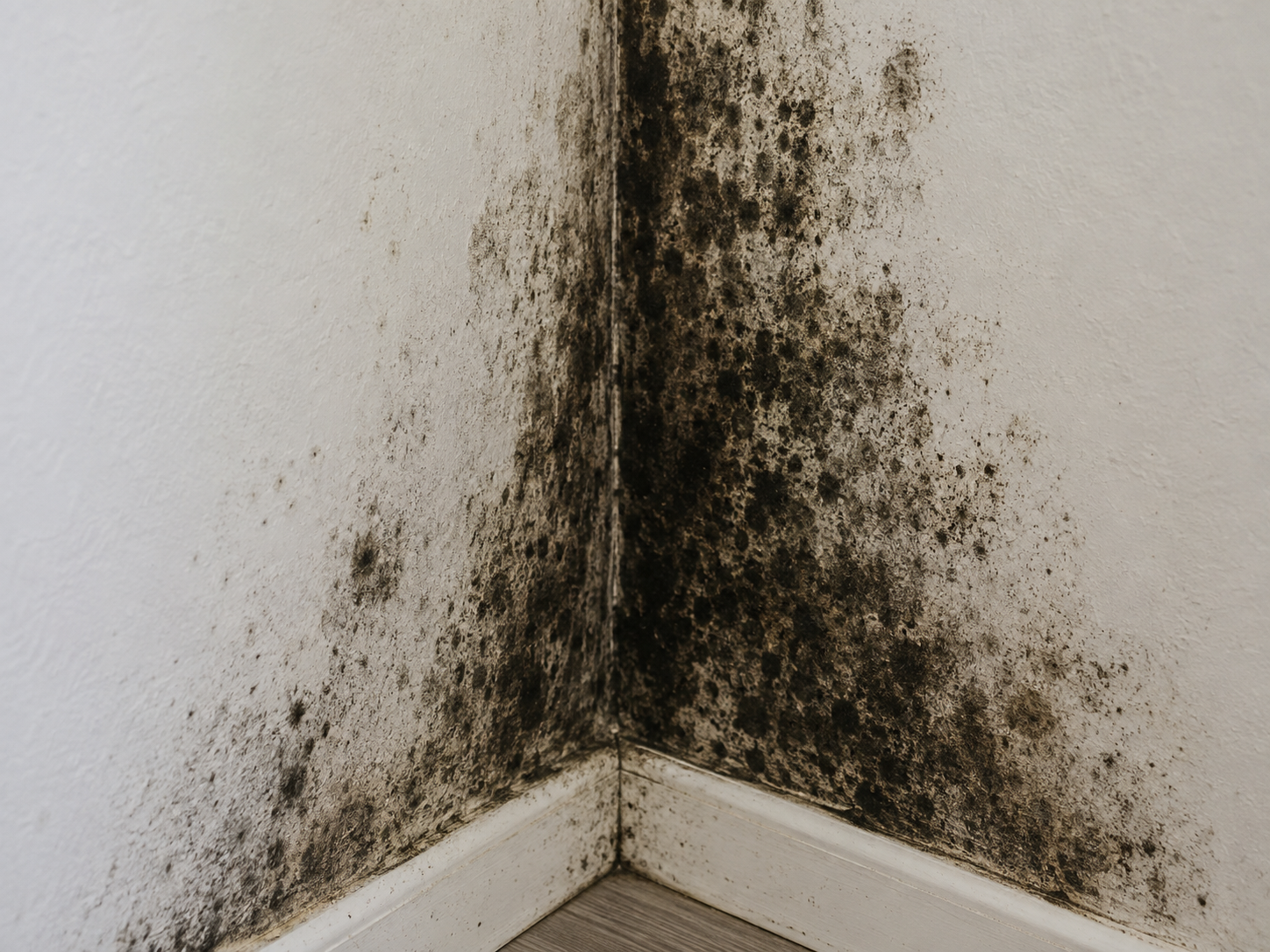
Dark mold growth spreading up an interior wall corner, the kind a licensed mold assessor evaluates
By Jonnatan R. Mendez, PE, SI • September 25, 2026
Before you hire for a mold assessment in Miami: how Florida licenses mold assessors under Fla. Stat. 468 Part XVI, the 12 month assessor versus remediator rule, and what a licensed PE adds. Call 866-531-7621.
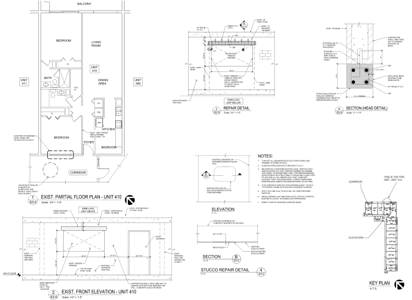
Structural drawing with plan, wall sections and details, ready for a Florida PE to sign and seal
By Jonnatan R. Mendez, PE, SI • September 25, 2026
What a Florida professional engineer seal means under Chapter 471: what must be signed and sealed, physical, digital and electronic sealing under Rule 61G15-23, and how to verify an engineer's license. Call 866-531-7621.
Drawing sheet with floor plan, wall sections and details, as checked in a structural plans review
By Jonnatan R. Mendez, PE, SI • September 25, 2026
Structural plans review in Florida for municipalities and developers: contract plan review under Fla. Stat. 468, private provider review and deadlines under 553.791, and how independent peer review differs. Call 866-531-7621.
Concrete balconies on a Palm Beach Shores beachfront building, evaluated by M&P Consulting Engineers
By Jonnatan R. Mendez, PE, SI • September 25, 2026
Concrete spalling balcony inspection in coastal Florida, explained by a structural engineer: how rebar corrosion causes spalling, what inspectors look for, when it triggers a Phase 2 milestone inspection, and how ACI 562 repairs work. Call 866-531-7621.

Stone-facade South Florida home with lush garden, a renovation type M&P Consulting Engineers reviews
By Jonnatan R. Mendez, PE, SI • September 24, 2026
The FEMA 50 percent rule in Florida, explained by a Miami structural engineer: how substantial improvement is calculated, Miami-Dade's cumulative counting and freeboard rules, and what an AE zone renovation must meet if it crosses the line. Call 866-531-7621.
One-story South Florida home with dark roof and yard, typical of M&P Consulting Engineers projects
By Jonnatan R. Mendez, PE, SI • September 24, 2026
Do you need a structural engineer to remove a wall in Miami-Dade? A licensed Miami engineer explains load-bearing walls, permits, the Florida Building Code rules and sealed drawings under Fla. Stat. 471, for homeowners planning an open layout. Call 866-531-7621.

Show More