
Premises Liability and Fla. Stat. 768.0755: How Engineers Evaluate Slip, Trip and Fall Claims

Jonnatan R. Mendez, PE, SI • September 22, 2026

Share this article

No. Slip resistance is one input. A sound opinion reads it alongside the surface condition, any contaminant, footwear, lighting, and maintenance history.

Hand pointing at a printed chart with colorful bars and a line graph on a wooden table

In a Florida slip-and-fall case, two questions run in parallel: did the business have the knowledge the law requires under Fla. Stat. 768.0755, and was the walking surface actually unsafe by engineering standards. A premises liability expert witness works the second question in a way that speaks to the first. This is how an engineer evaluates slip, trip, and fall claims, and where the legal standard and the engineering method meet.

The Legal Standard: Fla. Stat. 768.0755

For a slip and fall caused by a transitory foreign substance in a business establishment, the statute puts the burden on the injured person to prove the business had actual or constructive knowledge of the dangerous condition and should have taken action. Constructive knowledge is the piece most cases turn on, and it can be shown by circumstantial evidence in one of two ways: that the condition existed for a length of time such that, in the exercise of ordinary care, the business should have known of it, or that the condition occurred with regularity and was therefore foreseeable. That word, foreseeable, is where engineering evidence earns its place.

Where the Engineering Comes In

The statute sets what has to be proven. The engineering shows whether a dangerous condition existed and whether it was the kind that recurs. A forensic engineering evaluation of the walking surface, the geometry, and the maintenance history gives the trier of fact something more concrete than testimony about a single moment. Done well, it connects the physical condition to the knowledge and foreseeability the statute asks about.

Measuring Slip Resistance

Slip resistance is measurable, not a matter of impression. Engineers test the walking surface using ANSI A326.3, which measures the dynamic coefficient of friction, or DCOF, with a calibrated tribometer. A wet DCOF of 0.42 is the widely used threshold for level interior floors that are expected to be walked on when wet, with higher thresholds for wet-plus conditions and exterior surfaces. Some engineers also use pendulum testing under ASTM E303 to produce a slip-resistance value. An important caveat, and one a careful expert will volunteer, is that a DCOF number is a comparison tool, not a guarantee that a floor is safe or unsafe. The measurement is one input, read alongside the surface condition, any contaminant, footwear, and the maintenance record, rather than a single number that decides the case.

Trip Hazards and Walkway Safety

Trip and fall claims turn on geometry more than friction. ASTM F1637, the standard practice for safe walking surfaces, addresses changes in level, ramps, slopes, drainage, gratings, and the transitions between surfaces. As a rule of thumb drawn from that standard, an abrupt vertical change in level of as little as a quarter inch can constitute a trip hazard, and changes beyond that generally require a bevel or a ramp. An engineer measures the actual geometry, compares it to the standard, and documents where the walkway departs from what a reasonably safe surface should provide.

Building the Opinion

A defensible premises liability opinion documents the surface conditions, the measurements, the lighting, and the maintenance practices, then maps each of them to recognized standards. That is what lets the opinion speak to foreseeability rather than to a single slip, and it is what keeps the testimony admissible when the methodology is challenged. Because these opinions are litigated under Florida's Daubert standard, the method behind the numbers matters as much as the numbers, which is why the same structural design and analysis discipline that supports a defect case supports a premises case.

Why Timing Matters: Preserving the Scene

Walking surfaces do not hold still. A spill gets cleaned, a worn tile gets replaced, a mat appears where there was none, and the hazard that caused the fall is gone within days. Slip-resistance and geometry measurements taken close in time to the incident are far more defensible than ones taken after the surface has been altered, because they describe the floor as it actually was. For the same reason, the maintenance and cleaning logs, incident reports, and photographs should be preserved early, before they are overwritten or discarded in the ordinary course of business. A repair the business makes after the fall can itself become evidence of the condition that existed before it. The practical takeaway for counsel is to get an engineer to the scene while the conditions can still be documented firsthand, rather than reconstructing them from memory months later once the case is well underway.

Common Questions About Slip and Fall Engineering

  • What does Fla. Stat. 768.0755 require?

    In a business slip and fall involving a transitory foreign substance, the injured person must prove the business had actual or constructive knowledge of the dangerous condition and should have acted on it.

  • How do engineers measure whether a floor was slippery?

    They measure the dynamic coefficient of friction under ANSI A326.3 with a tribometer, and sometimes pendulum testing under ASTM E303. A wet DCOF of 0.42 is the common threshold for level interior floors.

  • Is a low friction number enough to prove the case?

    No. Slip resistance is one input. A sound opinion reads it alongside the surface condition, any contaminant, footwear, lighting, and maintenance history.

  • What standard governs trip hazards?

    ASTM F1637, the standard practice for safe walking surfaces, addresses changes in level, ramps, slopes, and transitions, and it treats even small abrupt changes in level as potential trip hazards.

  • Can the same engineer inspect and testify?

    Yes, and it keeps the method and the opinion connected, which is easier to defend under Daubert.

  • How soon should an engineer inspect the scene?

    As soon as possible. Walking surfaces change quickly, and measurements taken before the surface is cleaned, repaired, or altered are far more defensible than a later reconstruction.

Need a Premises Liability Expert in South Florida?

M&P Consulting Engineers provides premises liability and expert witness evaluations of slip, trip, and fall claims across South Florida. If you have a matter where the walking surface is in dispute, call 866-531-7621 early, while the conditions can still be measured firsthand.

Sources

Fla. Stat. 768.0755, premises liability for transitory foreign substances, Florida Legislature. Checked 18 September 2026.

ANSI A326.3, Test Method for Measuring Dynamic Coefficient of Friction of Hard Surface Flooring Materials.

ASTM F1637, Standard Practice for Safe Walking Surfaces.

ASTM E303, Measuring Surface Frictional Properties Using the British Pendulum Tester.

Recent Posts

By Jonnatan R. Mendez, PE, SI • October 5, 2026
What a structural engineer expert witness does in Florida litigation, explained by a licensed Miami engineer. The Daubert standard under Fla. Stat. 90.702, why it applies to engineers, and what makes testimony survive a challenge. Call 866-531-7621.
By Jonnatan R. Mendez, PE, SI • September 30, 2026
Threshold building inspections in Florida, explained by a Miami structural engineer. What makes a building a threshold building, what a special inspector does under Fla. Stat. 553.79, who can serve, and how it differs from a milestone inspection. Call 866-531-7621.
By Jonnatan R. Mendez, PE, SI • September 25, 2026
Florida's condo safety laws after Surfside, explained by a Miami structural engineer: SB 4-D (2022), SB 154 (2023) and HB 913 (2025), what each one changed for milestone inspections and SIRS, and the deadlines that apply now. Call 866-531-7621.
Corner balconies on a coastal condo tower in Palm Beach Shores, assessed by M&P Consulting Engineers
By Jonnatan R. Mendez, PE, SI • September 25, 2026
What changed after the Surfside condo collapse: NIST's June 2026 technical findings, SB 4-D, SB 154 and HB 913, and the milestone inspection mistakes Florida condo boards still make. Call 866-531-7621.
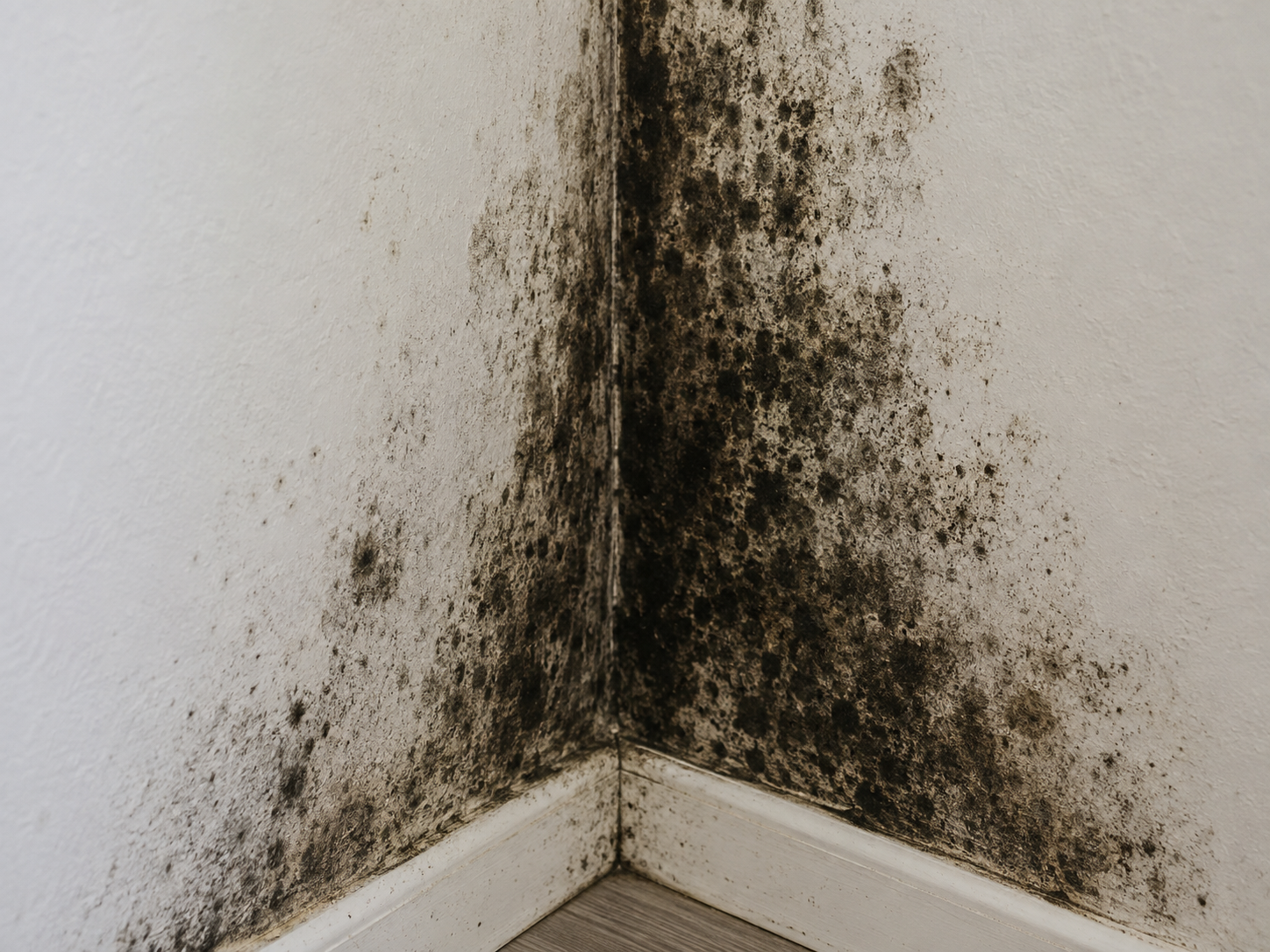
Dark mold growth spreading up an interior wall corner, the kind a licensed mold assessor evaluates
By Jonnatan R. Mendez, PE, SI • September 25, 2026
Before you hire for a mold assessment in Miami: how Florida licenses mold assessors under Fla. Stat. 468 Part XVI, the 12 month assessor versus remediator rule, and what a licensed PE adds. Call 866-531-7621.
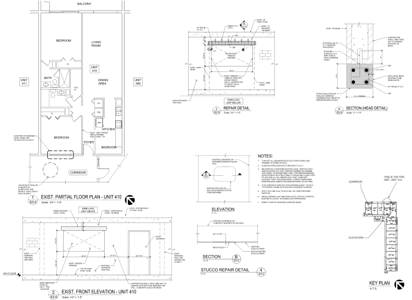
Structural drawing with plan, wall sections and details, ready for a Florida PE to sign and seal
By Jonnatan R. Mendez, PE, SI • September 25, 2026
What a Florida professional engineer seal means under Chapter 471: what must be signed and sealed, physical, digital and electronic sealing under Rule 61G15-23, and how to verify an engineer's license. Call 866-531-7621.
Drawing sheet with floor plan, wall sections and details, as checked in a structural plans review
By Jonnatan R. Mendez, PE, SI • September 25, 2026
Structural plans review in Florida for municipalities and developers: contract plan review under Fla. Stat. 468, private provider review and deadlines under 553.791, and how independent peer review differs. Call 866-531-7621.
Concrete balconies on a Palm Beach Shores beachfront building, evaluated by M&P Consulting Engineers
By Jonnatan R. Mendez, PE, SI • September 25, 2026
Concrete spalling balcony inspection in coastal Florida, explained by a structural engineer: how rebar corrosion causes spalling, what inspectors look for, when it triggers a Phase 2 milestone inspection, and how ACI 562 repairs work. Call 866-531-7621.

Stone-facade South Florida home with lush garden, a renovation type M&P Consulting Engineers reviews
By Jonnatan R. Mendez, PE, SI • September 24, 2026
The FEMA 50 percent rule in Florida, explained by a Miami structural engineer: how substantial improvement is calculated, Miami-Dade's cumulative counting and freeboard rules, and what an AE zone renovation must meet if it crosses the line. Call 866-531-7621.

One-story South Florida home with dark roof and yard, typical of M&P Consulting Engineers projects
By Jonnatan R. Mendez, PE, SI • September 24, 2026
Do you need a structural engineer to remove a wall in Miami-Dade? A licensed Miami engineer explains load-bearing walls, permits, the Florida Building Code rules and sealed drawings under Fla. Stat. 471, for homeowners planning an open layout. Call 866-531-7621.

Show More