
What a Structural Engineer Expert Witness Does in Florida, and the Daubert Standard

Jonnatan R. Mendez, PE, SI • October 5, 2026

Share this article

Yes, and it is often preferable. Having the testifying engineer perform the inspection keeps the methodology and the opinion connected and easier to defend.

Architect in hard hat reviewing large blueprint indoors

In Florida, a structural engineer's opinion only reaches the jury if it survives the Daubert standard in Fla. Stat. 90.702. For the attorneys who retain engineering experts, that makes the method behind the opinion as important as the opinion itself. This guide covers what a structural engineer expert witness does in Florida litigation, the standard the testimony has to clear, why that standard applies to engineers and not only to scientists, and what separates an opinion that holds up from one that gets struck.

What a Structural Engineer Expert Witness Does

A structural engineer expert witness investigates a failure or a disputed condition, applies established engineering methods, and forms an opinion a court can rely on. The work usually runs from a site inspection through a written report, a deposition, and trial testimony. Common matters include construction defect and workmanship disputes, structural failures and partial collapses, water intrusion and long-term deterioration, premises liability claims such as slip, trip, and fall, and hurricane or wind damage causation. The same forensic engineering investigation that establishes what happened is what supports the opinion later, which is why the two roles are so often held by the same engineer.

The Daubert Standard in Florida

Florida replaced the older Frye general-acceptance test with the federal Daubert standard. The Legislature amended Section 90.702 in 2013, and after several years of constitutional uncertainty the Florida Supreme Court formally adopted it on May 23, 2019, in In re Amendments to the Florida Evidence Code, 278 So. 3d 551 (Fla. 2019). Under Daubert, the trial judge acts as a gatekeeper, and expert testimony is admissible only if it is based on sufficient facts or data, it is the product of reliable principles and methods, and the expert has applied those principles and methods reliably to the facts of the case. The witness also has to be qualified by knowledge, skill, experience, training, or education.

Why Daubert Applies to Engineers, Not Just Scientists

Attorneys sometimes assume Daubert is a laboratory-science rule. It is not. In Kumho Tire Co. v. Carmichael, 526 U.S. 137 (1999), the U.S. Supreme Court held that the Daubert reliability inquiry extends to technical and specialized testimony, including engineering. That means a structural engineer's methods face the same scrutiny a scientist's would. The gatekeeping question is whether the engineering approach was sound, not whether the field itself is respected.

How the Frye-to-Daubert Shift Changed Florida Cases

The change from Frye to Daubert was not a formality. Under the old Frye test, only novel scientific evidence faced a gatekeeping check, and the question was narrow: had the method gained general acceptance in its field. Established engineering opinion largely passed without a reliability inquiry. Daubert widened the gate. Now every expert opinion, engineering included, can be tested for whether its method is reliable and reliably applied, and trial judges hold admissibility hearings to decide. The practical effect for Florida litigation is that methodology gets litigated earlier and harder than it used to. A motion to exclude an engineering expert is no longer unusual, and an opinion that would have survived under Frye on the strength of the expert's credentials can still be excluded under Daubert if the method behind it does not hold together. For counsel on either side, that shifts the work forward: the reliability of the engineering has to be built into the report, not defended for the first time at the hearing.

What Makes Engineering Testimony Hold Up

Courts weigh reliability using factors drawn from Daubert: whether the method can be and has been tested, whether it has been subjected to peer review and publication, its known or potential error rate, the existence of standards controlling how it is applied, and its general acceptance in the field. In practice, defensible structural testimony ties the opinion to accepted codes and standards such as the Florida Building Code and the relevant ASCE and ACI provisions, documents the data it relied on, and connects each conclusion back to that data. Opinions that rest on the expert's say-so alone, with no method shown, are the ones that draw a challenge and get excluded.

The Report and the Deposition

A defensible report states the facts and data relied on, the methodology, the standards applied, and the reasoning that links each of them to the opinion. When the report shows its work, the deposition becomes a defense of a documented method rather than a debate over an unsupported conclusion. Having the same engineer inspect the structure, prepare the report, and testify keeps the chain from observation to opinion intact, which is far easier to defend than a hand-off between separate people at each stage.

How to Vet a Structural Engineering Expert

Before retaining one, look at four things: Florida licensure and qualifications that fit the specific issue in dispute, a written methodology that can be documented and repeated, opinions that are tied to the facts rather than offered as pure opinion, and a track record of testimony that has survived challenge. An engineer whose reports already read like they were built for a Daubert motion is the one least likely to be surprised by one.

Common Questions About Engineering Expert Witnesses

  • What standard governs expert testimony in Florida?

    Florida applies the Daubert standard, codified in Fla. Stat. 90.702, with the trial judge acting as gatekeeper.

  • Does Daubert apply to engineering experts?

    Yes. In Kumho Tire, the U.S. Supreme Court held that the Daubert reliability inquiry applies to technical and specialized testimony, including engineering, not only to classical science.

  • What gets an engineer's opinion excluded?

    Insufficient facts or data, unreliable methods, or opinions that are not reliably tied to the facts of the case. Testimony offered as pure opinion, with no documented method, is the most vulnerable.

  • Can the same engineer inspect the property and testify?

    Yes, and it is often preferable. Having the testifying engineer perform the inspection keeps the methodology and the opinion connected and easier to defend.

  • What kinds of cases use a structural engineer expert witness?

    Construction defect, structural failure, water intrusion, premises liability, and wind or hurricane damage causation are the most common in Florida.

  • Did Florida used to follow a different standard?

    Yes. Florida applied the Frye general-acceptance test until the Florida Supreme Court adopted Daubert in 2019. Daubert subjects a wider range of expert testimony, engineering included, to a reliability inquiry.

Need a Structural Engineer Expert Witness in Florida?

M&P Consulting Engineers provides expert witness and structural design and analysis support in construction defect, structural failure, and premises liability matters across South Florida. If you have a matter where the engineering will be contested, call 866-531-7621 early, while the site conditions can still be documented firsthand.

Sources

Fla. Stat. 90.702, testimony by experts, Florida Legislature. Checked 18 September 2026.

In re Amendments to the Florida Evidence Code, 278 So. 3d 551 (Fla. 2019), Florida Supreme Court adoption of Daubert.

Kumho Tire Co. v. Carmichael, 526 U.S. 137 (1999), U.S. Supreme Court.

Recent Posts

By Jonnatan R. Mendez, PE, SI • September 30, 2026
Threshold building inspections in Florida, explained by a Miami structural engineer. What makes a building a threshold building, what a special inspector does under Fla. Stat. 553.79, who can serve, and how it differs from a milestone inspection. Call 866-531-7621.
By Jonnatan R. Mendez, PE, SI • September 25, 2026
Florida's condo safety laws after Surfside, explained by a Miami structural engineer: SB 4-D (2022), SB 154 (2023) and HB 913 (2025), what each one changed for milestone inspections and SIRS, and the deadlines that apply now. Call 866-531-7621.
Corner balconies on a coastal condo tower in Palm Beach Shores, assessed by M&P Consulting Engineers
By Jonnatan R. Mendez, PE, SI • September 25, 2026
What changed after the Surfside condo collapse: NIST's June 2026 technical findings, SB 4-D, SB 154 and HB 913, and the milestone inspection mistakes Florida condo boards still make. Call 866-531-7621.
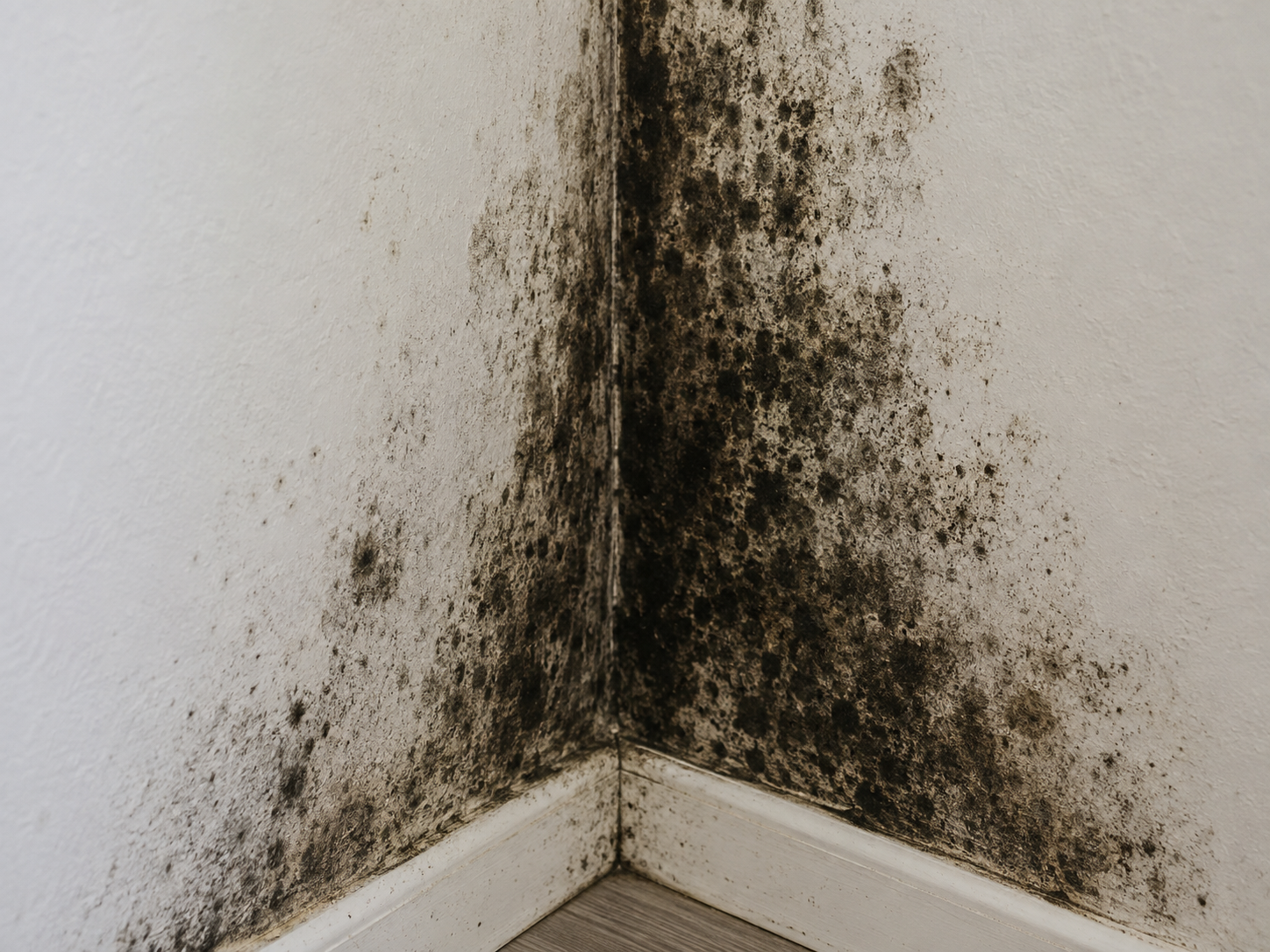
Dark mold growth spreading up an interior wall corner, the kind a licensed mold assessor evaluates
By Jonnatan R. Mendez, PE, SI • September 25, 2026
Before you hire for a mold assessment in Miami: how Florida licenses mold assessors under Fla. Stat. 468 Part XVI, the 12 month assessor versus remediator rule, and what a licensed PE adds. Call 866-531-7621.
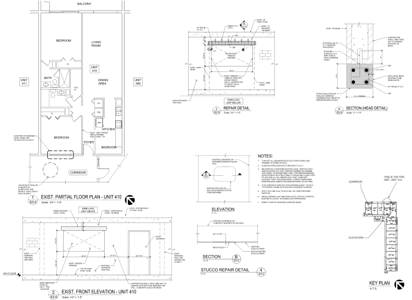
Structural drawing with plan, wall sections and details, ready for a Florida PE to sign and seal
By Jonnatan R. Mendez, PE, SI • September 25, 2026
What a Florida professional engineer seal means under Chapter 471: what must be signed and sealed, physical, digital and electronic sealing under Rule 61G15-23, and how to verify an engineer's license. Call 866-531-7621.
Drawing sheet with floor plan, wall sections and details, as checked in a structural plans review
By Jonnatan R. Mendez, PE, SI • September 25, 2026
Structural plans review in Florida for municipalities and developers: contract plan review under Fla. Stat. 468, private provider review and deadlines under 553.791, and how independent peer review differs. Call 866-531-7621.
Concrete balconies on a Palm Beach Shores beachfront building, evaluated by M&P Consulting Engineers
By Jonnatan R. Mendez, PE, SI • September 25, 2026
Concrete spalling balcony inspection in coastal Florida, explained by a structural engineer: how rebar corrosion causes spalling, what inspectors look for, when it triggers a Phase 2 milestone inspection, and how ACI 562 repairs work. Call 866-531-7621.

Stone-facade South Florida home with lush garden, a renovation type M&P Consulting Engineers reviews
By Jonnatan R. Mendez, PE, SI • September 24, 2026
The FEMA 50 percent rule in Florida, explained by a Miami structural engineer: how substantial improvement is calculated, Miami-Dade's cumulative counting and freeboard rules, and what an AE zone renovation must meet if it crosses the line. Call 866-531-7621.

One-story South Florida home with dark roof and yard, typical of M&P Consulting Engineers projects
By Jonnatan R. Mendez, PE, SI • September 24, 2026
Do you need a structural engineer to remove a wall in Miami-Dade? A licensed Miami engineer explains load-bearing walls, permits, the Florida Building Code rules and sealed drawings under Fla. Stat. 471, for homeowners planning an open layout. Call 866-531-7621.
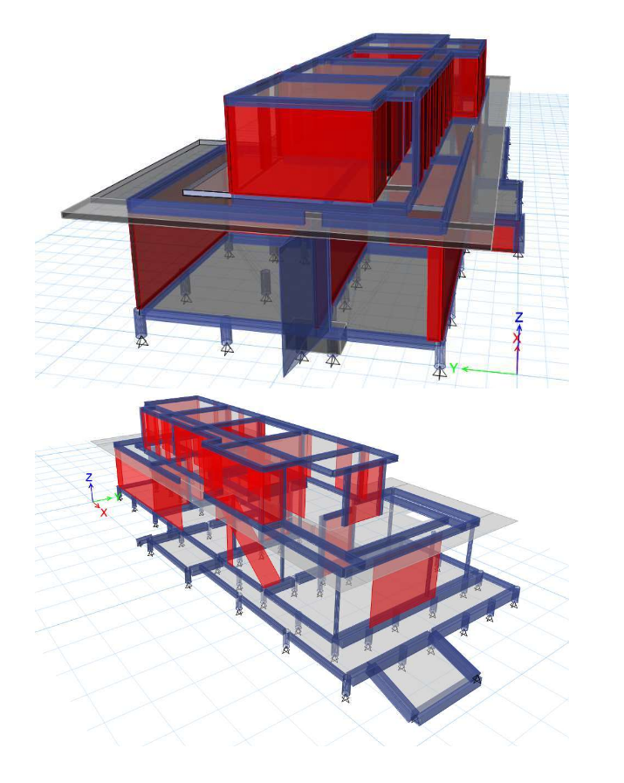
3D structural analysis model of two building frames for wind load design by M&P Consulting Engineers
By Jonnatan R. Mendez, PE, SI • September 24, 2026
The high velocity hurricane zone explained by a Miami structural engineer for architects and contractors: FBC Chapter 16 HVHZ wind loads and impact tests, Miami-Dade NOA product approval, and how design pressures and approvals fit together. Call 866-531-7621.

Show More